When shopping for lift kits and truck accessories in Reading, begin by determining if you need a leveling kit or a complete suspension lift. A leveling upgrade corrects factory rake while maintaining daily handling, whereas a suspension lift system offers clearance, wheel travel, and room for larger tires. You'll need exact year, trim, drivetrain, and suspension specifications to confirm Rough Country compatibility. Budget for tires, alignment, and accessories such as steps, lights, or liners—you'll understand how the proper setup comes together
Key Takeaways
- Choose a leveling kit to remove factory rake while keeping near-stock handling and fitting bigger tires for daily driving.
- Choose a suspension lift kit for increased ground clearance, wheel travel, and off-road performance, recognizing that steering response may differ.
- Validate exact fitment using your truck's year, model, make, drivetrain, trim, cab, bed, and suspension type prior to placing your Rough Country parts.
- Match lift height and shock absorbers to your application, whether commuting, mixed trail driving, towing, or heavier off-road travel.
- Budget for more than the kit cost, covering alignment, labor, wheels, tires, shocks, and add-on accessories like steps, lights, and liners.
Suspension Lifts versus Leveling Kits
Since both upgrades affect your truck's appearance, leveling kits and suspension lift kits address different issues and offer different results. A leveling upgrade generally raises the front to match the rear, correcting factory rake with minimal change to geometry, ride height, and daily drivability. You go with one when you desire a cleaner appearance and space for slightly larger tires.
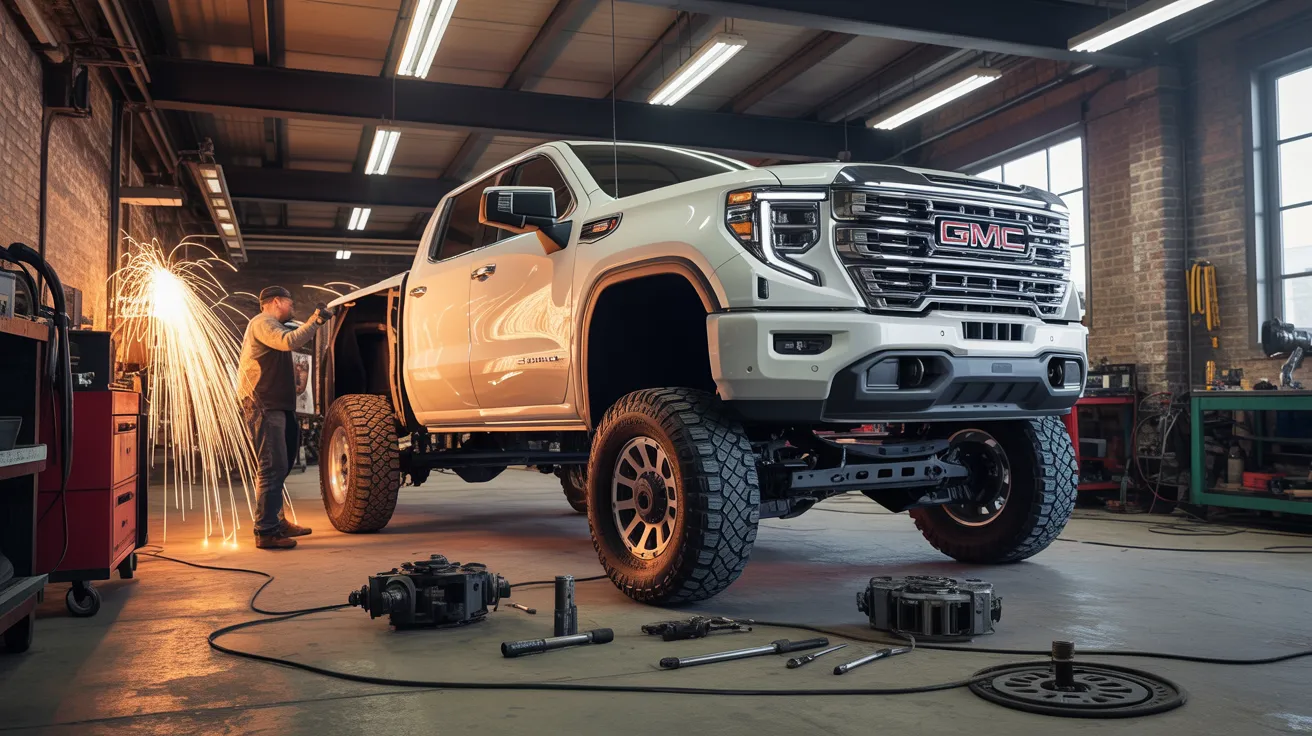
A suspension lift kit elevates the entire truck and modifies key components to create more ground clearance and suspension movement. You'll see major gains in ride height, off-road performance, and tire choices, but you should anticipate handling shifts, steering modifications, and a raised center of gravity. If you desire mild visual correction, go with a leveling kit. If you require true clearance and suspension articulation, lift it and plan the supporting mods around your specific needs.
Find the Rough Country lift kit that fits your truck.
Kick off by recording your truck's year, manufacturer, and model, drivetrain, and usage goals, as Rough Country engineers lift kits based on precise geometric specifications and performance objectives. This information reveals which suspension components, brackets, and fasteners will mount properly without fitment or geometry problems.
Then examine factory ride height, cab and cargo configuration, axle setup, and whether your truck uses 2WD, 4WD, or adaptive suspension. Rough Country fitment guides make this easy, although you have to validate component compatibility versus configuration-specific parts and factory package variations. A kit engineered for a Silverado 1500 might not work with a Trail Boss, and a Ram running pneumatic suspension necessitates different accommodations versus a coil-spring truck. By verifying fitment first, you prevent unexpected problems, component conflicts, and return delays.
Determine which Rough Country lift kit works with your driving style.
Match the kit with your driving style, and you'll achieve improved ride comfort, longevity, and additional tire clearance without paying for features you won't need. When your truck mainly commutes, choose a simple Rough Country leveling kit or a 2 to 3.5 inch suspension setup tuned for daily comfort and predictable steering geometry.
If your truck sees both pavement and trail time, move up to a suspension upgrade equipped with high-quality shocks Truck Ammo and adjusted control arm geometry. You'll enjoy enhanced off-road performance, improved articulation, and clearance for larger tires without taxing factory components. For extensive off-road use, select lifted shock struts, N3 or Vertex dampers, and setups that keep driveline angles correct under compression. The correct Rough Country kit should match cargo load, speed, and terrain, and your preferred ride firmness.
Premium Rough Country Truck Accessories
Enhance your suspension upgrade including Rough Country upgrades that fix the real problem areas you'll encounter after lifting and upgrading tires. Focus on upgraded steps or rock sliders, that bring back cabin access and provide side protection as your truck sits higher and wider.
Next, prioritize
How Much Budget Do You Need for Your Build?
After you've selected the suspension system and supporting accessories, establish a budget exceeding the headline kit price. You'll need funds for shocks, wheel rims, tire set, alignment, labor, and any drivetrain or steering corrections your vehicle needs. Company reputation is important here; premium systems generally provide tighter tolerances, enhanced comfort, and fewer install headaches.
For accurate cost estimates, expect entry-level spacer or leveling setups to start lower, while full suspension systems with control arms, tuned dampers, and larger tires escalate rapidly. Install difficulty, labor charges, and calibration work can add substantially. You should also budget for additional upgrades such as gear modifications, brake parts, and recovery equipment if you're building for trail use. If budget is a concern, evaluate payment plans thoroughly and prioritize dependability over flashy add-ons.
Popular Questions About Lifts
Can Lift Kits Affect Factory Warranty Coverage?
Yes, lift systems can affect your factory warranty coverage, but they won't necessarily void it. You may face warranty problems when the dealer proves the lift kit triggered or contributed to a breakdown. Drive system, steering, suspension, and drivetrain disputes often trigger dealer disputes. You must maintain installation records, use quality components, and follow service intervals. That helps you dispute declined claims and protect coverage if the modification wasn't responsible.
Will Larger Tires Need Re-Gearing?
Yes—if you jump several tire sizes, you'll often require gear ratio changes. As an example, if you switch from 31-inch to 35-inch tires, your vehicle can feel slow, shift erratically, and build drivetrain stress when loaded. Changing gears brings back effective gear ratios, helping you recover acceleration, towing performance, and transmission behavior. You may not require gearing for a small tire upgrade, but if acceleration, mileage, or shifting deteriorates, it's normally the right choice.
How Often Should Lift Kit Components Be Inspected?
You ought to check lift kit components after the first 500 miles, next during each oil change or every 3,000 to 5,000 miles, based on your driving. Periodic inspections help you catch bushing wear, shock leaks, bracket damage, and alignment issues in advance. Check Fastener torque after hard off-road runs, towing, or impacts. Should you operate in mud, salt, or rough terrain often, shorten intervals and inspect steering and suspension parts at shorter intervals.
Will a suspension kit change your truck's towing and payload ratings?
Yes, a suspension lift can alter your truck's towing and payload limits. When you increase ground clearance for more ground clearance, you shift suspension alignment, center of gravity, and force distribution on parts. That can compromise stability when loaded and increase drivetrain stress, especially with larger tires. You should stick with your manufacturer's ratings unless an engineered kit specifically documents new ratings. Correct alignment, gearing, and braking function matter too.
Do Alignment Services require focus following the installation of truck add-ons?
Yes—if components alter ride elevation, suspension configuration, steering geometry, or tire size, you need an alignment. You'll notice the impact right away: slight changes can make your truck drift off-center, scrub tread, and worsen handling characteristics. A full alignment restores camber setting, caster setting, and toe setting to standard. After particular upgrades, you could also benefit from brake calibration for driver aid precision. You safeguard tire durability, steering sharpness, and real-world safety by performing alignment checks promptly.
Final Thoughts
Picking the best suspension setup and accessories comes down to how you use your truck, what stance you want, and your available funds. When you match a Rough Country system alongside your driving style, you'll get strength, elevation, and visual appeal which synchronize like a well-tuned drivetrain. Incorporate intelligent add-ons, manage your expenses thoughtfully, and you'll construct a truck that's practical on the road, competent outdoors, and positioned for upcoming challenges.