When shopping for lift kits and truck accessories in Reading, begin by determining if you need a leveling kit or a full suspension lift. A leveling kit corrects factory rake while maintaining daily handling, whereas a suspension lift offers clearance, wheel travel, and room for larger tires. You'll need precise year, trim, drivetrain, and suspension specifications to confirm Rough Country compatibility. Budget for tires, alignment, and add-ons such as steps, lights, or liners—you'll understand how the proper setup comes into place
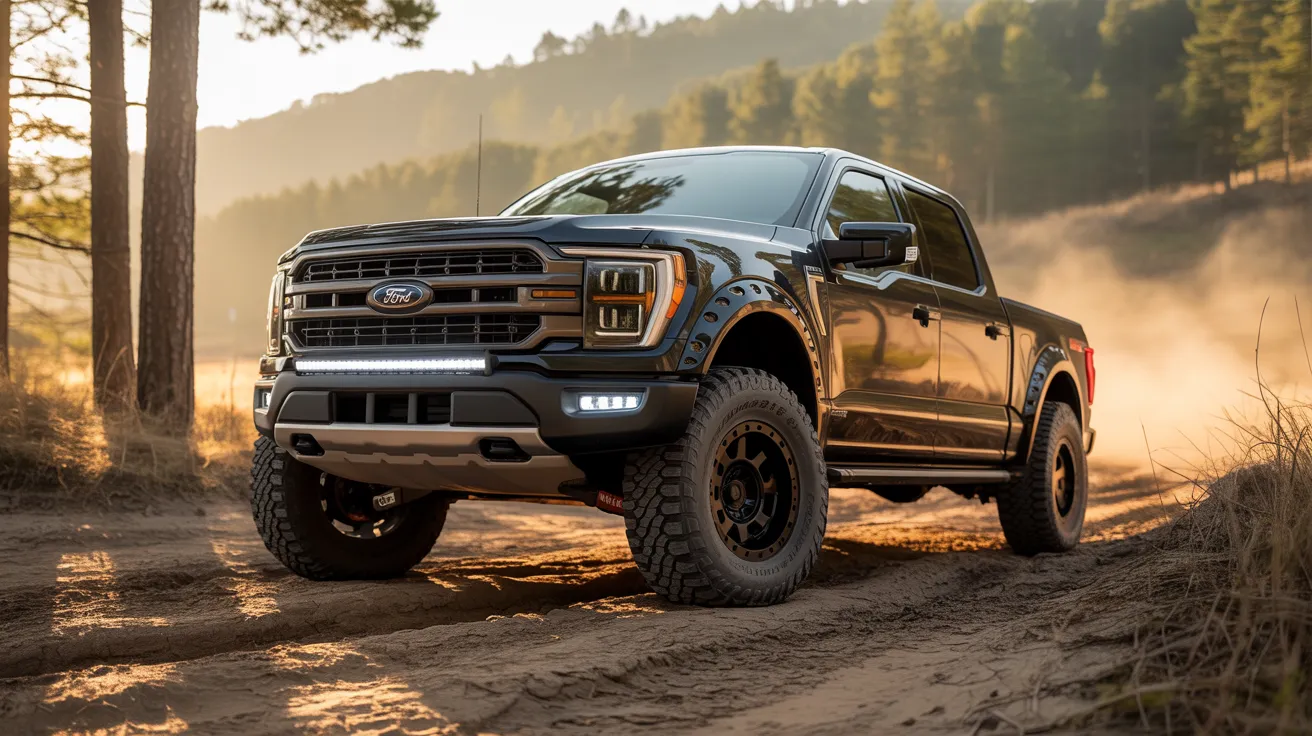
Essential Information
- Choose a leveling kit to remove factory rake while keeping near-stock handling and fitting slightly larger tires for daily driving.
- Go with a suspension lift kit for enhanced clearance, wheel travel, and performance off-road, recognizing handling and steering may shift.
- Validate proper fitment using your truck's year, model, make, drivetrain, trim, cab, bed, and suspension type before placing your Rough Country components.
- Match lift height and shocks to your use, whether commuting, trail driving, towing, or heavy off-road use.
- Allocate funds for beyond just the kit cost, covering alignment, labor, wheels, tires, shocks, and add-on products including steps, lights, and liners.
Suspension Lift Kits Against Leveling Kits
Even though both upgrades modify your truck's stance, suspension lift kits and leveling kits fix different problems and give unique results. A leveling kit usually raise the front to comprehensive guide meet the rear, rectifying factory rake with minimal change to geometry, ride height, and everyday drivability. You use one when you want a cleaner profile and room for slightly larger tires.
A suspension lift kit elevates the entire truck and changes key components to create more ground clearance and wheel travel. You'll see major gains in ride height, off-road performance, and tire choices, though you should plan for handling tradeoffs, steering changes, and a higher center of gravity. When you desire mild visual correction, level it. When you require real clearance and articulation, use a suspension lift and plan the supporting mods around your use case.
Determine which Rough Country lift kit works your truck.
Begin by recording your truck's year, make, model, drive configuration, and intended use, because Rough Country manufactures lift kits around precise structural specifications and performance standards. That baseline shows which mounting hardware and suspension elements will install without spacing or alignment conflicts.
Then verify original ride height, cab layout and bed setup, axle configuration, and whether your truck features 2WD, 4WD, or adaptive suspension. Rough Country compatibility documentation streamline this process, although you need to confirm fitment accuracy versus configuration-specific parts and factory package variations. A kit made for a Silverado 1500 might not work with a Trail Boss, and a Ram featuring air-based suspension needs different accommodations rather than a truck with coil springs. By verifying fitment first, you sidestep install surprises, compatibility issues, and return hassles.
What Rough Country lift kit is ideal your driving habits?
Match the kit to your driving patterns, and you'll enjoy better ride quality, reliability, and tire space without purchasing unnecessary capability. When your truck mainly commutes, choose a light leveling kit from Rough Country or a suspension lift of 2 to 3.5 inches optimized for daily comfort and predictable steering geometry.
If your truck sees both pavement and trail time, move up to a lifted suspension that includes upgraded shocks and optimized control arm positioning. You'll achieve improved trail handling, improved articulation, and clearance for larger tires without taxing original components. For serious trail work, select lifted shock struts, Rough Country N3 or Vertex dampers, and lifts that maintain driveline geometry during compression. The right Rough Country package should match payload, speed, and terrain, and your preferred ride firmness.
Best Rough Country Truck Accessories
Complete your lift setup using Rough Country accessories that solve the real weak points you'll see once you lift it and add bigger tires. Start with improved entry steps or rock guards, which bring back ease of cabin entry and provide lower-vehicle protection when your truck sits higher and wider.
focus
How Much Should You Budget for Your Build?
Once you've picked the lift kit and complementary parts, set a budget that covers more than the base kit cost. You'll need room for shocks, rims, rubber, alignment, labor, and any suspension or steering modifications your platform requires. Brand reputation matters here; premium systems usually deliver more precise specifications, improved comfort, and fewer install headaches. higher precision, superior ride comfort, and fewer install headaches.
Regarding realistic budget ranges, expect basic spacer or leveling kits to start at lower prices, while comprehensive suspension packages with control arms, tuned dampers, and bigger tires increase fast. Installation complexity, shop rates, and calibration work may contribute significantly. You ought to budget additional upgrades such as gear swaps, brake parts, and recovery tools if you intend for off-road use. When budget is tight, assess payment alternatives meticulously and emphasize consistency rather than fancy extras.
Frequently Asked Questions
Will Lift Kits Change My Factory Warranty?
Yes, suspension kits can affect your original warranty, but they won't automatically cancel it. You encounter warranty issues if a dealer demonstrates the suspension modification led to or was involved in a malfunction. Engine, steering, suspension, and drivetrain issues often trigger dealer disputes. You should keep installation records, use quality components, and stick to maintenance schedules. That allows you to contest denied claims and maintain protection where the modification didn't cause the problem.
Will Larger Tires Need Re-Gearing?
Yes—if you jump multiple tire sizes, you'll often require gear ratio adjustments. For example, when you move from 31s to 35s—your truck may feel underpowered, shift awkwardly, and increase drivetrain strain under load. Changing your gears recovers effective gear ratios, helping you recover power delivery, towing capacity, and transmission feel. You may not require it for small tire changes, yet if power, fuel economy, or shift quality drop, it's usually the right call.
When Should You Check Your Lift Kit?
You should inspect lift kit components after the first 500 miles, then during each oil change or every 3,000 to 5,000 miles, depending on use. Periodic inspections help you catch bushing wear, shock leaks, bracket damage, and alignment issues early. Verify bolt tightness after hard off-road runs, towing, or impacts. If you drive in muddy, salty, or rugged conditions frequently, reduce inspection spacing and check steering and suspension parts at shorter intervals.
Does a suspension kit alter towing or payload capacity?
Yes, a suspension kit can impact your towing and payload capacity. When you increase ground clearance for additional clearance, you alter suspension design, weight distribution, and leverage on components. That can decrease stability under weight and boost transmission strain, particularly with oversized tires. You should follow your OEM specifications unless an engineered kit specifically documents updated ratings. Proper alignment, gear ratios, and braking ability matter too.
Are Alignment Services Needed After Installing Truck Accessories?
Yes—if components alter ride elevation, suspension configuration, steering geometry, or tire size, you should get an alignment. You'll notice the impact fast: small modifications can pull your truck off-center, damage tread rapidly, and compromise handling. A full alignment brings back camber, caster setting, and toe to standard. After certain installs, you could also benefit from brake calibration for driver aid precision. You protect tire durability, steering sharpness, and genuine safety by checking alignment immediately.
Summary
Determining the proper lift configuration and products relies on your truck's application, your preferred stance, and your cost capacity. When you tune a Rough Country suspension to your driving approach, you'll experience performance, clearance, and looks that work together like a well-tuned drivetrain. Add wise upgrades, structure your spending carefully, and you'll develop a rig that's practical on the road, capable off it, and equipped for anything next.